
Educational Resources for Patients & Care Givers
Psoriasis: A brief Introduction
Causes, Treatment options and How to get help
What is Psoriasis?
Psoriasis is a chronic (long-lasting) condition where the body’s immune system gets confused and accidentally signals skin cells to grow way too fast. Instead of taking weeks to shed, new skin cells pile up on the surface in just a few days, creating thick, itchy, and scaly patches. Think of psoriasis as a glitch in the body's internal clock that makes the skin grow at "super speed."
What are the causes of Psoriasis
The main cause or trigger for psoriasis is not known, but it is considered to be activated by certain genetic abnormalities, environmental factors, medications, chemicals and infections. To understand that leads to psoriasis, it helps to look at how normal skin works and compare this to skin with psoriasis:
- Normal Skin:Your body constantly makes new skin cells deep underground. They slowly mature and rise to the surface over about 28 to 30 days, where they naturally flake off without you noticing.
- Psoriasis Skin:The immune system goes into a false alarm mode, telling the body it needs to repair skin immediately. New cells rush to the surface in just 3 to 4 days. Because the old skin cells haven't had time to shed yet, a massive "traffic jam" happens on the surface. This cellular traffic jam creates raised, inflamed, raised patches known as plaques.
What does Psoriasis look like?
There are different types of Psoriasis, but the most common is plaque Psoriasis.
On lighter skin, these usually look like red patches covered with silvery scales. On darker skin, they often look more purplish, greyish, or dark brown with thick scales. It can occur in any part of the body: on the scalp resembling severe dandruff, on the face, in the groin, on the trunk (chest and abdomen), neck, nails, limbs and mouth.
There are other types of psoriasis such as pustular psoriasis, nail psoriasis, erythrodermic psoriasis, psoriatic arthritis and others.
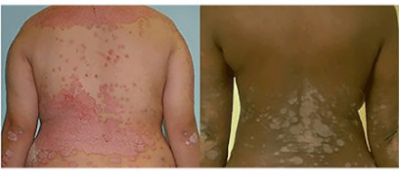
(c) https://www.aad.org/public/diseases/psoriasis/treatment/treatment
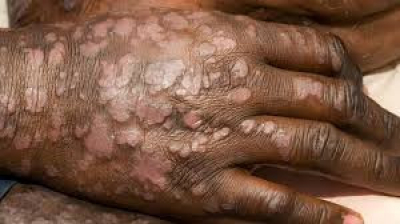
(c) https://www.medicalnewstoday.com/articles/325068
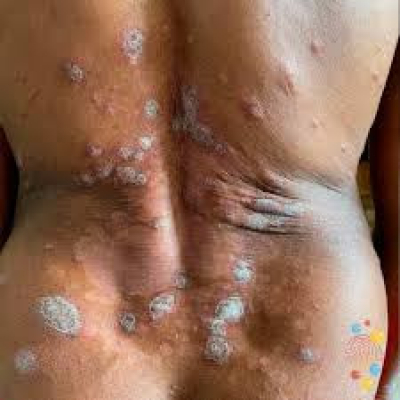
(c) https://encrypted-tbn0.gstatic.com/images?q=tbn:ANd9GcQAd_PoXizBIlz9h3W51TP6hPkdETZ8U1xnhg&s
Some Facts Everyone Should Know about Psoriasis
- Psoriasis is not a curse and there are many other people all over the world who have this condition
- Psoriasis is not an infection so it is absolutely NOT contagious: you cannot catch psoriasis from touching someone, sharing a pool, or shaking hands. It is entirely internal.
- It is an autoimmune issue, not just "dry skin." The root cause is the dysregulation of the immune system, often triggered by genetics, stress, illness, or skin injuries.
- It goes in cycles. Psoriasis doesn't look the same all the time. People experience "flares" where the skin breaks out, followed by periods of remission where the skin clears up entirely.
- It is treatable and the flares can be controlled with medications or certain procedures.
What can you do when you suspect you or someone you know have psoriasis?
While there is no cure yet, modern treatments—ranging from targeted creams to light therapy and advanced medications—are incredibly effective at slowing down that "super speed" clock and giving people clear skin.